Carved by time, geology, and ancient belief, cenotes are among the most extraordinary natural formations on Earth. These crystalline sinkholes once served as the lifeblood of Maya civilization — and they still cast an irresistible spell on every traveler who descends into their depths.
Cenotes owe their existence to a cataclysmic event that occurred approximately 66 million years ago, when a massive asteroid — estimated at 10 to 15 kilometers wide — struck the Yucatán Peninsula near present-day Chicxulub. The impact fractured the limestone bedrock across thousands of square kilometers, setting the geological stage for what would eventually become one of the world's most extensive underground water systems. Over millions of years, slightly acidic rainwater slowly dissolved the porous limestone, carving vast subterranean caverns. When these cave ceilings eventually collapsed, they exposed the spectacular water-filled sinkholes we recognize today as cenotes.
The word cenote derives from the Yucatec Maya term 'ts'onot,' meaning a water-filled cavity or well. The Yucatán Peninsula hosts an estimated 6,000 to 10,000 cenotes, many connected by an intricate underwater river network spanning hundreds of kilometers. This subterranean labyrinth represents the largest known underground river system on the planet. Cenotes vary dramatically in form — from open circular pools flooded with sunlight to partially covered caverns draped in stalactites and fully enclosed cave systems accessible only to experienced cave divers. Their depths range from a few meters to over 100 meters, each shaped by unique geological conditions over millennia.
For the ancient Maya, cenotes were far more than water sources — they were sacred portals to Xibalba, the Maya underworld. Maya cosmology held that cenotes represented the entrance to the realm of the dead, presided over by powerful deities who controlled rain, water, and agricultural fertility. The rain god Chaac was intimately associated with these natural wells, and Maya priests conducted elaborate rituals at cenote edges, offering gifts to appease divine forces and ensure seasonal rains. The cenote at Chichén Itzá, known as the Sacred Cenote or Cenote Sagrado, became one of the most important pilgrimage sites in all of Mesoamerica for over a thousand years.
Archaeological excavations of the Sacred Cenote at Chichén Itzá, conducted most notably by American diplomat Edward Herbert Thompson between 1904 and 1910, revealed an astonishing array of sacrificial offerings. Thompson dredged the 60-meter-wide, 27-meter-deep cenote and recovered gold discs, jade figurines, copper bells, wooden objects, rubber artifacts, and human skeletal remains. Subsequent scientific dredging in the 1960s by Mexico's National Institute of Anthropology and History uncovered over 30,000 objects representing offerings from across the Maya world and beyond. The bones of men, women, and children confirmed that human sacrifice, though not universally practiced at every cenote, played a role in the most significant ritual sites.
Beyond their ritual importance, cenotes were absolutely critical to Maya survival in the Yucatán Peninsula, which has no surface rivers or lakes. The region's entire freshwater supply exists underground, making cenotes the sole reliable water source for drinking, agriculture, and daily life. Major Maya cities were deliberately constructed near cenote clusters — Chichén Itzá has four known cenotes, and the ancient city of Cobá was built around two large ones. Researchers believe the distribution of cenotes across the Yucatán directly influenced settlement patterns, trade routes, and population density throughout the Classic and Post-Classic Maya periods, roughly 250 to 1500 CE.
Scientific and recreational interest in cenotes accelerated dramatically during the 20th century. Jacques Cousteau himself explored the cenotes of the Yucatán in 1973, famously describing the water as among the clearest he had ever encountered. His television documentaries brought these hidden worlds to global audiences for the first time, sparking widespread fascination. Cave diving pioneers began systematically exploring and mapping the underwater passages connecting cenotes during the 1980s, gradually revealing the staggering scale of the Sistema Dos Ojos and Sistema Sac Actun networks near Tulum — cave systems now recognized as the longest in the world, stretching over 400 kilometers of mapped passages.
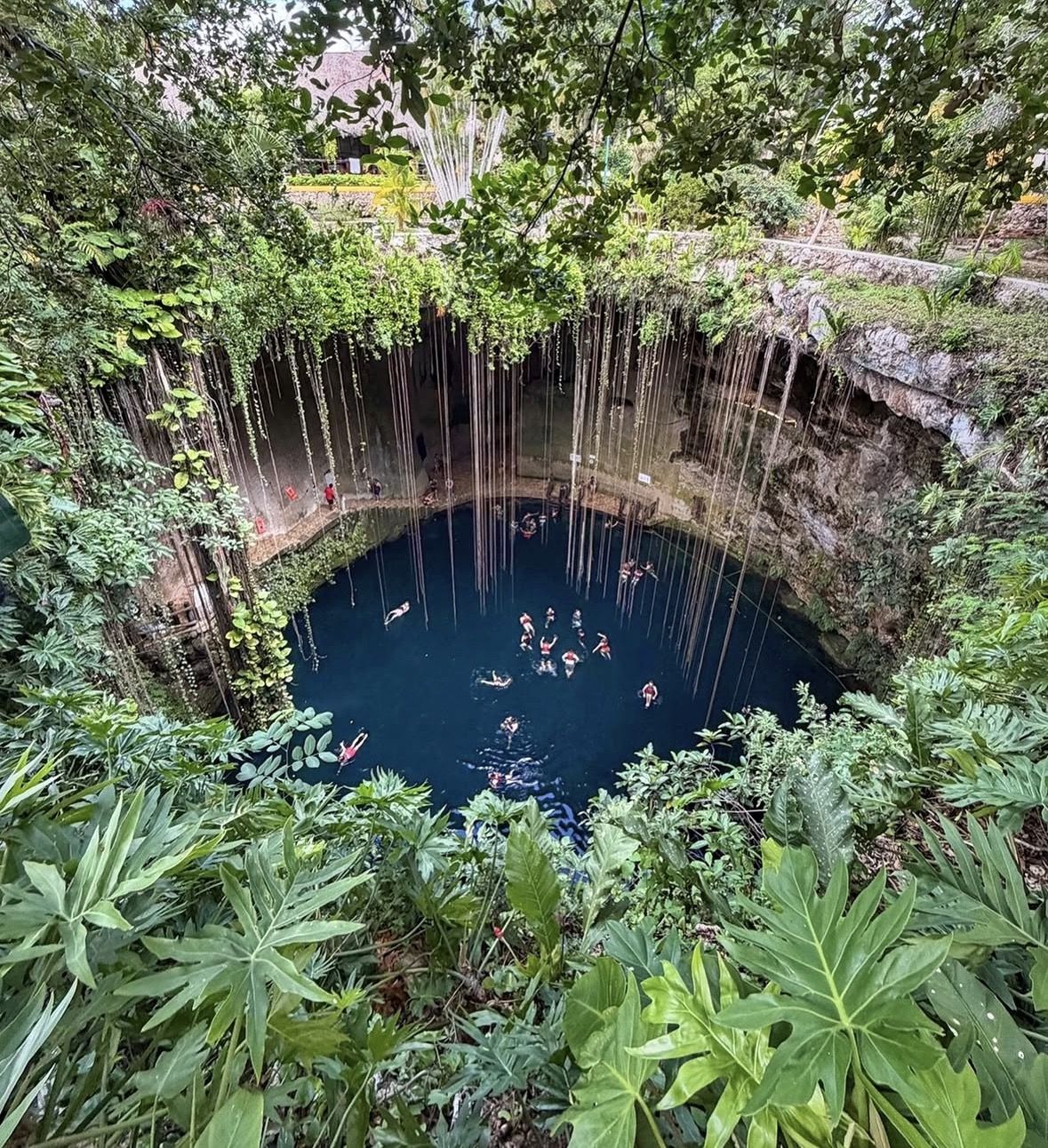
The development of Cancún as an international resort destination from the 1970s onward transformed cenote access for travelers. By the 1990s, cenotes near Playa del Carmen, Tulum, and the broader Riviera Maya had become mainstream tourist attractions, drawing snorkelers, divers, swimmers, and history enthusiasts from every corner of the globe. Iconic sites such as Gran Cenote, Dos Ojos, Ik Kil, and Cenote Azul were developed with visitor infrastructure while attempting to preserve their natural character. Ik Kil, located just three kilometers from Chichén Itzá, became particularly famous for its dramatic vertical walls draped in hanging roots and vines, plunging 26 meters to a turquoise pool below.
In 2018, an extraordinary archaeological discovery elevated the global profile of cenote research enormously. Underwater archaeologists exploring the Sac Actun cave system near Tulum discovered what was described as the largest underwater archaeological site ever found. The system contained over 200 archaeological contexts including ancient Maya artifacts, bones of extinct megafauna such as gomphotheres and giant ground sloths, and human remains dating back at least 13,000 years. The findings provided groundbreaking evidence of how early humans migrated across the Americas at the end of the last Ice Age, demonstrating that cenotes are not merely natural wonders but irreplaceable archives of human and natural history.
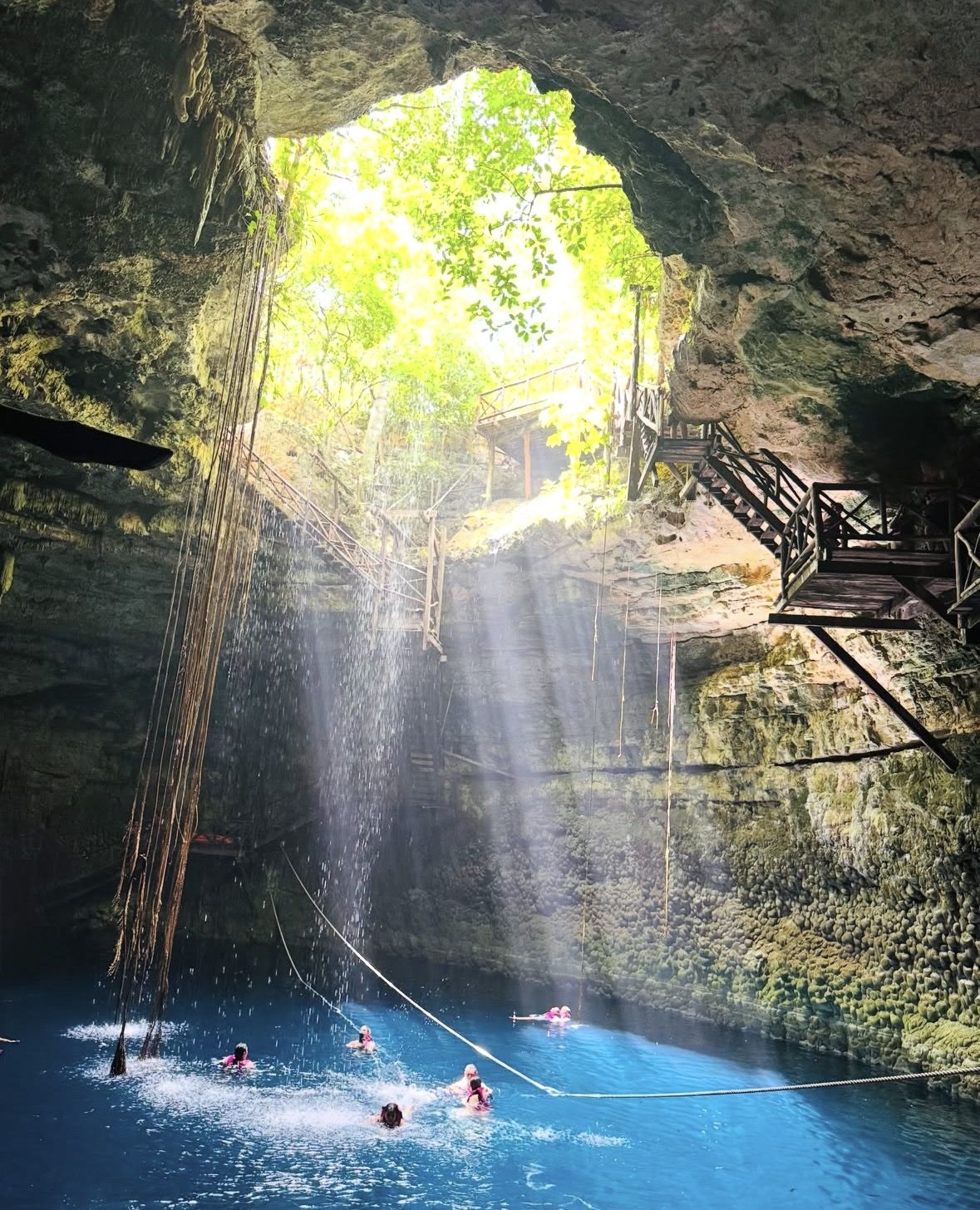
Today, cenotes remain among Mexico's most sought-after natural experiences, attracting millions of visitors annually to the Yucatán Peninsula. Travelers can choose from hundreds of accessible sites offering experiences ranging from serene open-air swimming holes fringed with jungle vegetation to dramatic cave diving expeditions in crystal-clear, visibility-rich waters. The Mexican government and conservation organizations actively work to balance tourism demand with environmental protection, regulating visitor numbers, banning sunscreens at many sites, and creating protected natural areas. The cenotes of the Yucatán collectively form part of a UNESCO-recognized biosphere reserve, and advocacy for their full World Heritage designation continues to grow among scientists and conservationists worldwide.
Visiting a cenote is an experience that transcends ordinary travel — it is a simultaneous encounter with geological deep time, ancient human spirituality, ecological wonder, and physical beauty unlike anything else on Earth. Whether you float in the cathedral light filtering through a semi-open cenote at dawn, dive through silent underwater passages alongside blind catfish and ancient stalactites, or simply stand at the edge and contemplate the generations of Maya who stood in the same spot, the feeling is profound and unforgettable. Plan your journey to the Yucatán Peninsula and discover for yourself why these sacred waters have captivated humanity for thousands of years.
Ready to Experience It Yourself?
From the iconic Ik Kil to the hidden gems of Tulum, certified guides and curated tours can take you safely into the heart of these ancient natural wonders. Booking a professionally guided cenote tour ensures you access the best sites while respecting the fragile ecosystems that make them so extraordinary. Secure your spot today and prepare for one of the most breathtaking experiences of your life.
Book Your Tour Now